
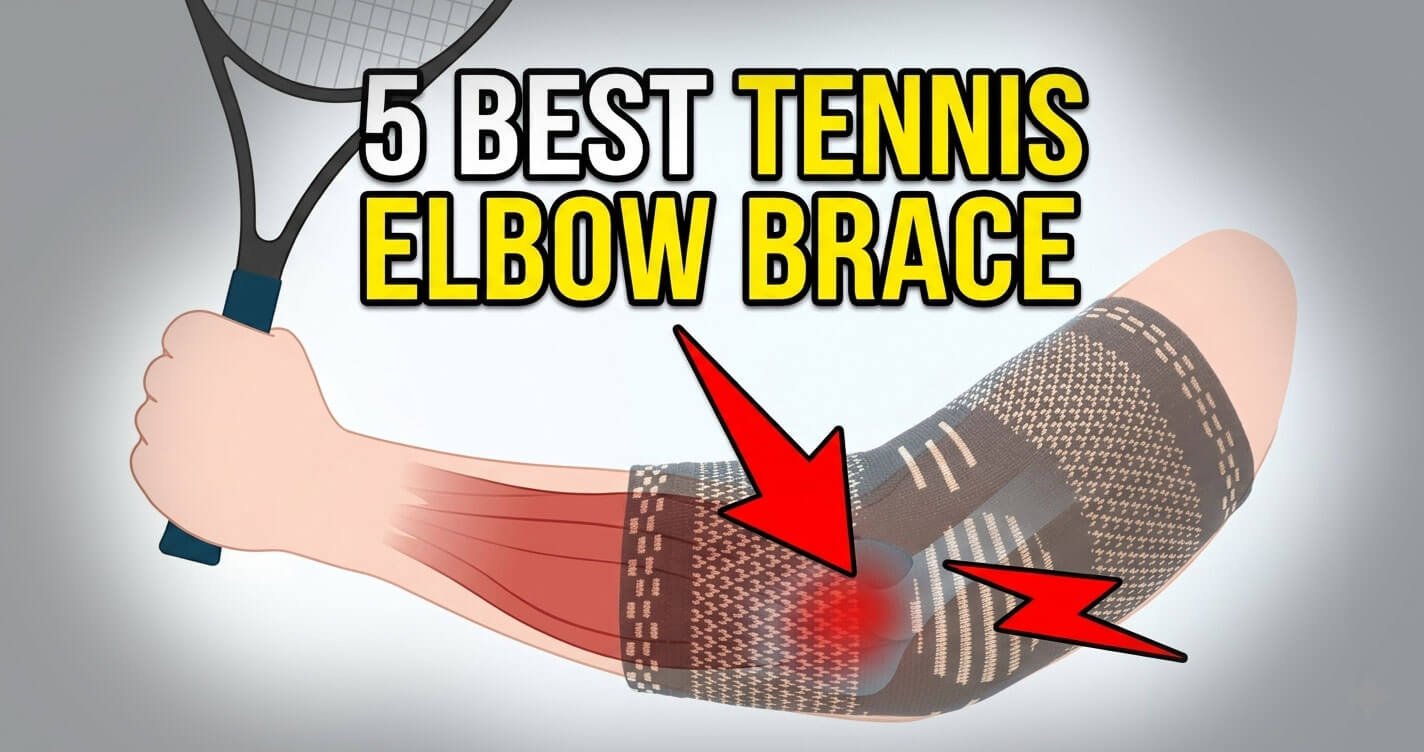
I play five mornings a week. Two hours each session. At 47, my elbow has developed some strong opinions about that schedule.
A while back, tennis elbow hit my right arm — that nagging pain right on top of the elbow that makes every backhand feel like a bad idea. I ended up fixing it without a brace — a simple exercise routine and switching to a lighter racket did the job. But that’s a story for another day.
Here’s what I noticed, though: plenty of guys I play with went the brace route. And for them, it worked. The pain dropped, they stayed on the court, they kept playing — different bodies, different solutions.
So even though I’m personally not a “strap-everything-on” kind of player — I don’t wear wrist bands, knee sleeves, or any of that — I put this guide together for the players who need to keep playing right now and want an honest take from someone who’s actually on the court, not behind a desk googling symptoms.
Let’s get into it — your elbow isn’t getting any younger.
Quick Context: Who Needs a Brace?
Who Actually Needs a Tennis Elbow Brace?
First, the honest answer: a brace won’t fix tennis elbow. It’s not a cure.
What it does is buys you time — reduces the pain enough to keep playing while your tendon recovers in the background. Think of it as a pressure valve, not a solution.
That said, for a lot of players, that’s exactly what they need. Especially if you’re mid-season, can’t afford to sit out, or just refuse to stop playing. Which, if you’re reading this, is probably you.
Two types worth knowing before you shop:
Counterforce strap — the classic band that wraps around your forearm, about 2–3 inches below the elbow. It redirects pressure away from the damaged tendon. Best when you’re actively playing and need targeted relief right now.
Compression sleeve — covers the whole elbow area, improves circulation, reduces inflammation. Better for recovery days, daily wear, or mild prevention.
Some braces combine both. We’ll get to those.
One more thing: fit matters more than brand. Too tight cuts circulation. Too loose and you’re just wearing a bracelet. Check the forearm measurement chart before you buy — every product below includes sizing guidance.
Now, the picks. 👇
Top 5 Best Tennis Elbow Braces for Tennis Players (2026)
#1 Sleeve Stars Tennis Elbow Brace — Best Overall
Type: Counterforce strap | Reviews: 14,000+

If I had to point every player in my circle to one brace, this would be it.
The Sleeve Stars works on a simple principle: three adjustable straps let you dial in exactly how much compression you need — minimal support on a good day, maximum on a rough one. That flexibility matters more than you’d think. Elbow pain isn’t the same every morning, and most braces don’t account for that.
It sits comfortably during play without shifting around — which is the main thing you want from a counterforce strap. Nothing worse than stopping mid-rally to readjust something on your arm.
A few things worth noting: the fit runs slightly snug for some players, so if you’re between sizes, go up. It’s also latex-free, which matters if you’re wearing it for extended sessions in the heat.
Over 14,000 reviews on Amazon, consistently rated above 4.3 stars. Verywell Fit named it their Best Overall tennis elbow brace for 2025. That’s not hype — that’s a lot of elbows giving feedback.
What I like:
- Three compression levels in one brace
- Stays in place during active play
- Sweat-absorbent, holds up over time
- Works for both tennis elbow and golfer’s elbow
Worth knowing:
- Runs snug — size up if in doubt
- Counterforce strap only, not a sleeve
#2 Bodyprox Elbow Brace 2-Pack — Best Value
Type: Counterforce strap | Reviews: 33,000+
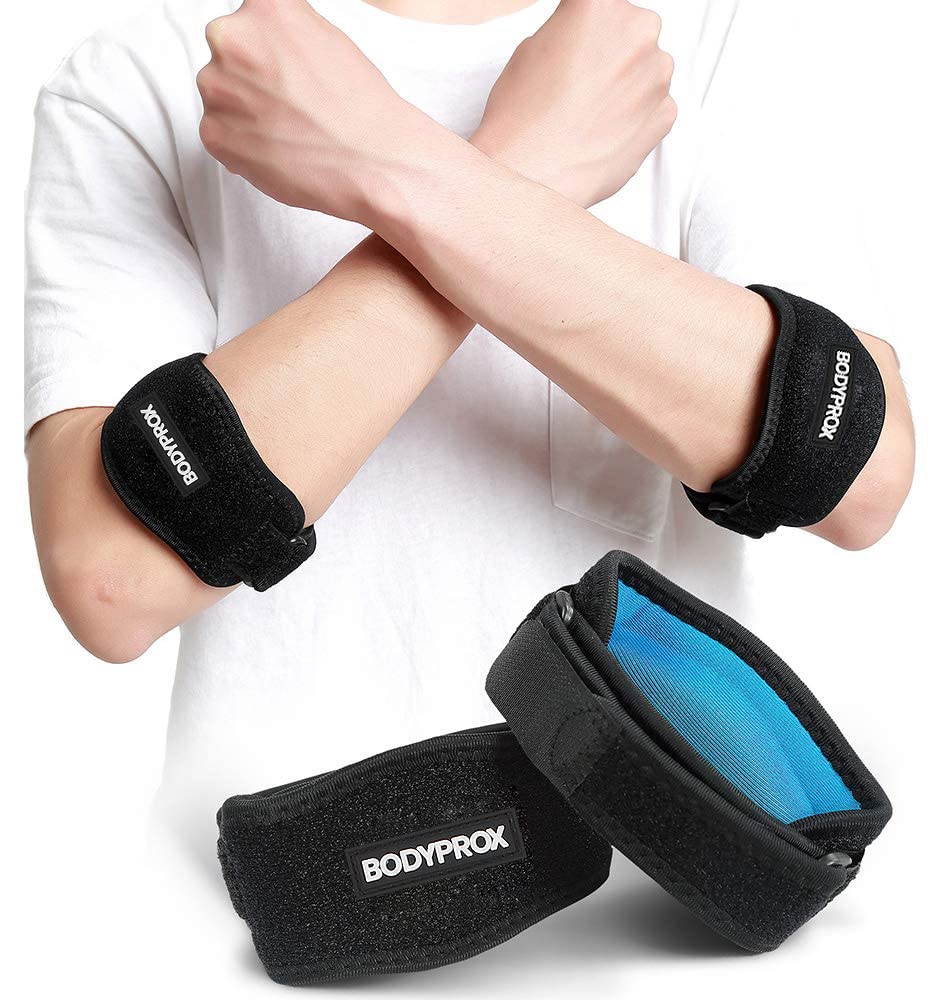
Two braces for the price of one — and somehow still one of the best-reviewed elbow braces on Amazon.
The math here is simple: keep one in your tennis bag, one at home. Or share one with a playing partner who’s been complaining about their elbow for three months but hasn’t done anything about it yet. We all have that guy in our group.
The Bodyprox uses a gel pad under the strap to target the pressure point directly — same counterforce principle as the Sleeve Stars, slightly simpler design. One strap instead of three, which some players actually prefer. Less to fidget with, easier to put on mid-warmup.
33,000+ reviews at 4.4 stars. That’s not a fluke. At this price point, it’s the lowest-risk way to try a brace for the first time without committing to something expensive.
One honest note: the single strap gives you less adjustability than the Sleeve Stars. If your pain is more severe, you might want the extra control. But for mild to moderate tennis elbow — or if you’re buying it as a preventive measure — this does the job without overthinking it.
What I like:
- 2-pack — great value, always have a spare
- Gel pad for targeted compression
- Simple, easy to put on and adjust
- Lightweight, doesn’t interfere with swing
Worth knowing:
- Less adjustable than 3-strap options
- May irritate skin during very long sessions
#3 APOYO Elbow Brace — Best All-Around Support
Type: Compression sleeve + adjustable strap | Reviews: 4.4/5

Here’s where it gets interesting.
The first two picks are counterforce straps — great for targeted relief during play. The APOYO does something different: it combines a full compression sleeve with an adjustable strap on top. You get circulation support across the whole elbow joint and targeted pressure where it hurts most. Both at once.
For players dealing with tennis elbow that’s been lingering for a while — not just a bad week, but a bad few months — this kind of all-around support can make a noticeable difference. The sleeve reduces inflammation over time while the strap handles the acute pain during rallies.
It’s also one of the better options for hot weather play. The fabric breathes well enough that you won’t feel like you’re cooking your elbow mid-match — which, if you’ve ever worn a cheap neoprene sleeve in summer, you know is not a small thing.
Sits firmly without slipping, even during aggressive movement. That non-slip quality matters more in a sleeve than a strap because sleeves have more surface area to migrate around your arm.
Slightly pricier than the first two picks, but you’re essentially getting two products in one.
What I like:
- Sleeve + strap combo — best of both worlds
- Breathable fabric, good for long sessions
- Non-slip fit during active play
- Works for both prevention and active pain relief
Worth knowing:
- Pricier than strap-only options
- Might feel bulkier for players who dislike wearing gear
#4 CAMBIVO 2-Pack Elbow Brace — Best Budget
Type: Compression sleeve | Reviews: 10,000+ at 4.4/5

Nine dollars. Two sleeves. Thousands of happy elbows.
Look, not every tennis elbow situation needs a premium solution. If your pain is mild, if you’re buying it as a preventive measure, or if you just want to try a compression sleeve before committing to something more structured — CAMBIVO is where you start.
The 3D knit fabric does two things well: it compresses evenly without creating pressure points, and it actually breathes. A lot of budget sleeves skip one or the other. This one manages both, which is why it’s sitting at #1 Best Seller in the elbow brace category on Amazon.
No straps, no pads, no adjustments needed. You pull it on and it does its job quietly in the background. For some players, that simplicity is exactly what they want.
Be honest with yourself about one thing though: if your tennis elbow is acute — sharp pain during play, affecting your swing, keeping you up at night — this sleeve alone won’t be enough. You need targeted compression, not just general support. Step up to #1 or #3 on this list.
But for daily wear, light prevention, or recovery between sessions? Hard to argue with nine dollars for two.
What I like:
- Unbeatable price for a 2-pack
- Even compression, no pressure points
- Breathable 3D knit fabric
- Simple — pull on and go
Worth knowing:
- Sleeve only, no targeted strap support
- Not enough for acute or severe pain
- Best for mild pain and prevention
#5 ABYON Elbow Brace & Compression Sleeve — Best for Serious Players
Type: Compression sleeve + 2 straps | Reviews: 4.4/5
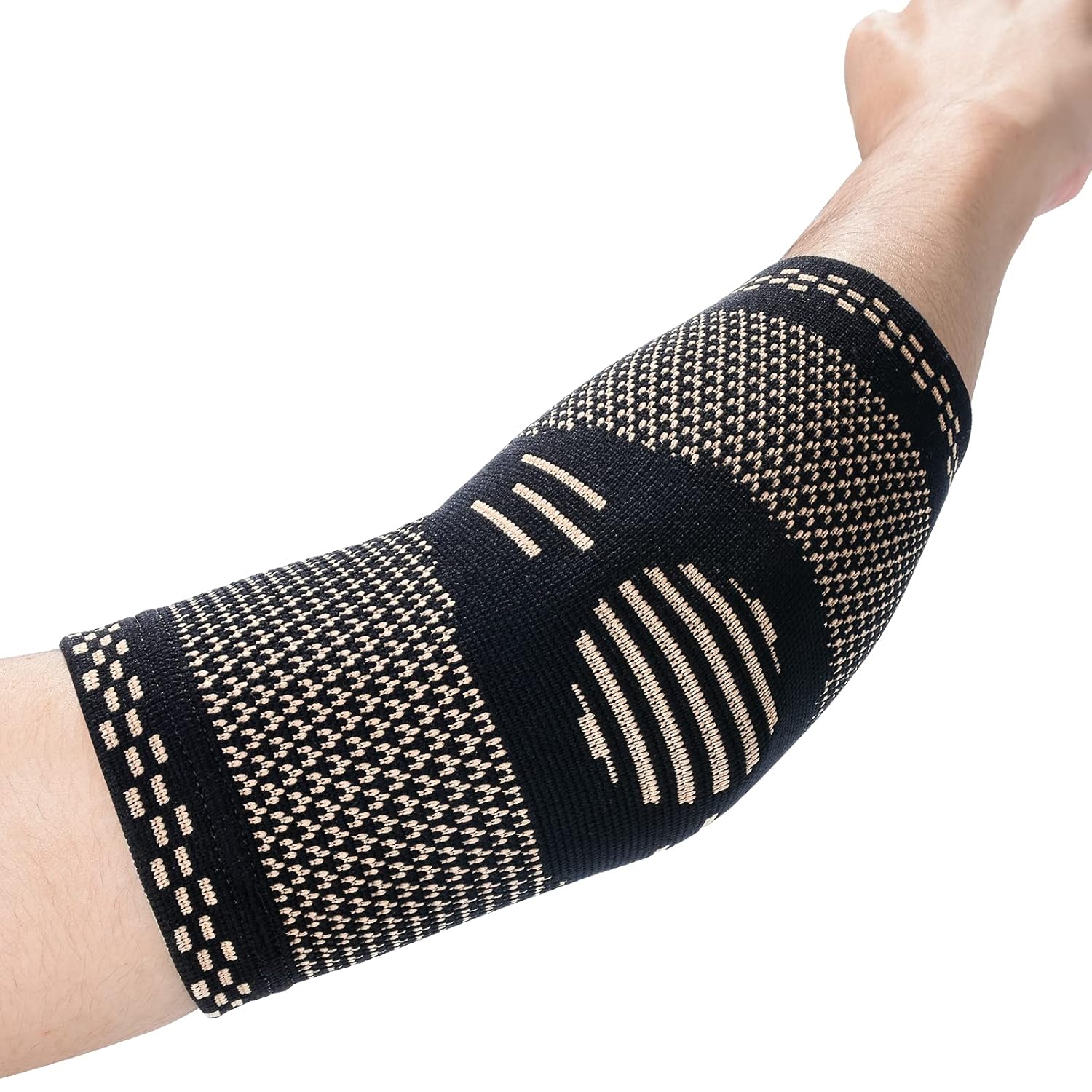
If you’re the kind of player who takes their tennis seriously — five mornings a week, year-round, no off-season — this is the brace built for that lifestyle.
The ABYON takes the combo concept from #3 and pushes it further. Instead of one adjustable strap over a sleeve, you get two. One targets the area just below the elbow where tennis elbow typically fires up. The second adds support above the joint. Together they create a wrap-around support system that serious players and The Tennis Tribe reviewers consistently rate as the most comprehensive option in this price range.
It’s not the brace you grab for a casual hit on the weekend. It’s the one you reach for when you’re playing through pain because stopping isn’t an option — tournament prep, competitive league, or just because you’re the kind of person who shows up regardless.
The sleeve underneath handles circulation and inflammation. The two straps handle the acute pain during play. That combination means it works during matches and during recovery. Most braces do one or the other well. This one genuinely does both.
One honest note: two straps plus a sleeve means more to put on and adjust. If you’re someone who wants to be court-ready in thirty seconds, the simpler options higher up this list will suit you better. But if you’re dealing with persistent tennis elbow and want maximum support, this is your pick.
What I like:
- Dual strap system — most targeted support on this list
- Sleeve + 2 straps works for both play and recovery
- Breathable nylon fabric, secure fit
- Best choice for high-frequency players
Worth knowing:
- More to put on than single-strap options
- Slightly bulkier feel during play
- Overkill for mild or occasional pain
A brace helps you stay on the court while you recover. But if you want to actually fix the problem — and keep it from coming back — you need to give your tendon some work to do. Here are the simplest tennis elbow exercises I’ve found, designed specifically for players who hate exercising → [Tennis Elbow Exercises That Actually Work — Even for the Laziest Players]
How to Choose the Right Brace for You
Not sure which one to pick? Answer these three questions.
1. How bad is the pain right now?
Mild — noticeable but not affecting your game much → CAMBIVO (#4). Cheap, simple, gets the job done.
Moderate — affecting your swing, there after every session → Sleeve Stars (#1) or Bodyprox (#2). Targeted counterforce strap, proven at this level.
Severe or persistent — been going on for months, affects daily life, not just tennis → ABYON (#5). Maximum support, built for exactly this situation.
2. When are you wearing it?
During play only → counterforce strap. Sleeve Stars or Bodyprox. Targeted, minimal bulk, won’t slow your swing.
Recovery and daily wear → compression sleeve. CAMBIVO for budget, APOYO (#3) if you want strap support on top.
Both — on court and off → APOYO or ABYON. Combo designs built to transition between play and recovery without swapping gear.
3. How do you feel about wearing stuff on your arm?
Fine with it, happy to strap up → any of the above, go with what matches your pain level.
Hate wearing gear, already considering skipping this entire category → I get it. Honestly, that’s me too. But if the pain is real, start with CAMBIVO. Minimal feel, barely notice it’s there. If it helps, great. If you want more support, step up from there.
One thing I’d add from experience:
A brace buys you time. It doesn’t fix the underlying problem. The players I know who got rid of tennis elbow for good — not just managed it — did two things: fixed their technique or equipment, and worked through a simple exercise routine consistently.
I switched to a lighter racket and did a few minutes of eccentric wrist exercises every morning. Elbow’s been quiet since. If you want the full breakdown on that approach, I cover it in detail here → [How I Fixed My Tennis Elbow Without a Brace]
For now, though — get the brace, stay on the court, and give your tendon the time it needs.
A brace helps — but knowing how to adjust your game while you recover matters just as much. Here’s how to keep playing without making things worse.
Frequently Asked Questions
Do tennis elbow braces actually work?
For most players, yes — with the right expectations. A brace won’t heal the tendon. What it does is reduce the load on the damaged area during activity, which means less pain while you play and faster recovery between sessions. Think of it as giving your elbow a fighting chance while life continues around it.
Can I wear a brace while playing tennis?
Yes, and that’s exactly what counterforce straps are designed for. The Sleeve Stars and Bodyprox on this list are both built for active play — they stay in place during movement and don’t restrict your swing. Compression sleeves work too, but they’re better suited for lighter sessions or recovery days.
How tight should a tennis elbow brace be?
Tight enough to feel light pressure on the forearm muscle — not on the elbow bone itself. If your hand starts tingling or going numb, loosen it immediately. A common mistake is wearing it too high. The strap should sit about 2–3 inches below the elbow, on the muscle belly, not over the joint.
Counterforce strap vs compression sleeve — which is better for tennis?
Different tools for different situations. Strap for active pain during play. Sleeve for circulation, inflammation, and recovery. If you can only pick one and you’re buying it to play through pain — go with the strap. If you want something for daily wear and prevention — go with the sleeve. If you want both — APOYO or ABYON.
How long does tennis elbow take to heal?
Honest answer: anywhere from a few weeks to several months, depending on severity and whether you actually rest it. Most players don’t rest it — they manage it and keep playing, which is exactly what a good brace helps you do. If pain persists beyond three months without improvement, see a sports physio. Some cases need more than self-management.
Wrap Up
Bottom Line: Which One Should You Get?
If you’re still on the fence, here’s the short version:
Most players → Sleeve Stars (#1). Best overall support, most adjustable, proven across thousands of players. Start here.
Tight budget → CAMBIVO (#4). Nine dollars, two sleeves, no excuses.
Want the best value for money → Bodyprox (#2). Two braces, great price, does the job without overcomplicating things.
Want sleeve and strap in one → APOYO (#3). Best all-around combo for players who want support during play and recovery.
Serious, high-frequency player with persistent pain → ABYON (#5). Maximum support, built for players who don’t take days off.
Whatever you pick — wear it consistently, give your elbow time to recover, and don’t ignore what your body is telling you.
A brace is a tool. Use it well.
And if you want to go deeper on actually fixing tennis elbow rather than just managing it — not just bracing through it — I put together everything that worked for me personally right here:
→ [How I Fixed My Tennis Elbow Without a Brace — and Got Back to Playing 5 Mornings a Week at 47]
→ [Best Ankle Brace for Tennis Players (2026): A Rec Player’s Honest Guide to Not Making My Mistake]
See you on the court.