
The Game — by Michael Nguyen
I was wrapping my elbow before a match when I saw the news.
Not my finest moment, honestly — standing courtside at 6 AM, struggling with athletic tape I still haven’t figured out how to apply correctly, when the notification popped up on my phone. Carlos Alcaraz. Wrist injury. Withdrawing from Roland Garros.
(Update: Also withdrawing from Wimbledon 2026 – Unfortunately)
I just stood there for a second, tape half-done, staring at the screen.
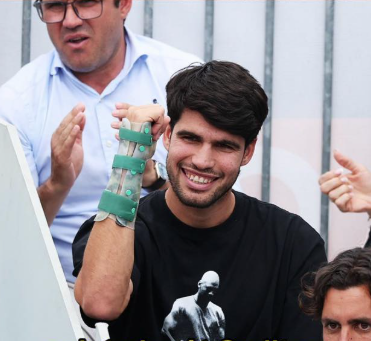
If you’re an Alcaraz fan — and I very much am — you know the specific feeling I’m talking about. It’s not just disappointment. It’s that low-grade dread that comes with the words wrist injury and a tennis player’s name in the same sentence. Because we’ve seen this before. We know how this story can go.
I finished taping my elbow and went out and played anyway. Because that’s what we do.
You may also want to read: Tennis Cramping Isn’t a Fitness Problem — And That’s Why You Keep Getting It Wrong
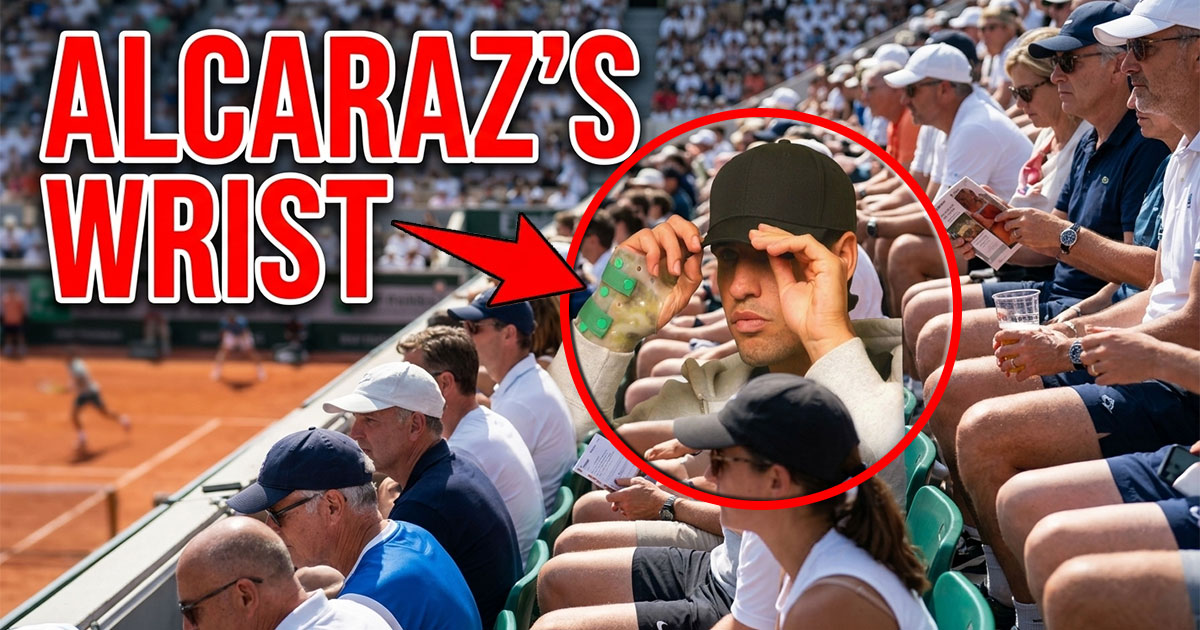
Alcaraz’s Wrist: What Actually Happened
Alcaraz felt something go during a match in Barcelona. Not a fall. Not a collision. Just a return — one swing — and something in his right wrist sent a message he couldn’t ignore.
The diagnosis: tenosynovitis. Inflammation of the tendon sheath around the wrist, caused by repetitive motion, aggravated by exactly the kind of high-speed, heavy-spin game that makes Alcaraz so extraordinary to watch.
If you’ve read my piece on tennis elbow, you already know this neighborhood. Overuse injuries all live on the same street. Tennis elbow is your elbow tendons complaining about repetitive stress. Tenosynovitis is your wrist tendons doing the same thing, one joint over. Different address, same landlord.
The treatment plan: rest, immobilization, no surgery. Conservative approach. He’s out for the full clay season — Italian Open, French Open, all of it — and the target is to be ready for Queen’s Club in June, which would set him up for Wimbledon.
On paper, that sounds manageable. In practice, it’s the entire clay season. The surface he was defending champion on at Roland Garros. Gone.
The Ghost Nobody Wants to Name
Here’s the thing about wrist injuries and tennis players.
We all think about Juan Martín del Potro. We just don’t always say it out loud.

Del Potro was a force of nature. One of the most gifted players of his generation — a guy who beat Federer and Nadal in the same Olympic tournament, a guy whose forehand was basically a weapon of mass destruction. His ceiling had no ceiling.
And then the wrist injuries started.
Not one injury. A sequence of them, each one coming back worse because he kept returning too soon, kept pushing, kept trying to be what he was before his body was ready. By the end, he wasn’t just injured — he was a different player. A diminished one. His career didn’t end with a retirement ceremony. It just slowly, painfully ran out.
Rennae Stubbs — former world No. 1 in doubles, someone who’s watched a lot of tennis careers up close — said it plainly when Alcaraz’s injury was announced: just look at Del Potro. It went down the toilet.
That’s the ghost sitting in the room right now.
Is Alcaraz handling this correctly? I think yes. Sitting out an entire clay season when you’re 22 years old and the defending champion at Roland Garros — that’s not a soft decision. That’s a hard, smart, long-game decision. The kind you make when you’re playing the decades, not the months.
But here’s the question I genuinely want to hear your take on: do you think he’s making the right call? Or would you have tried to play Roland Garros?
Sinner’s Record and the Asterisk Question
While Alcaraz has been out, Jannik Sinner has been doing something historic.
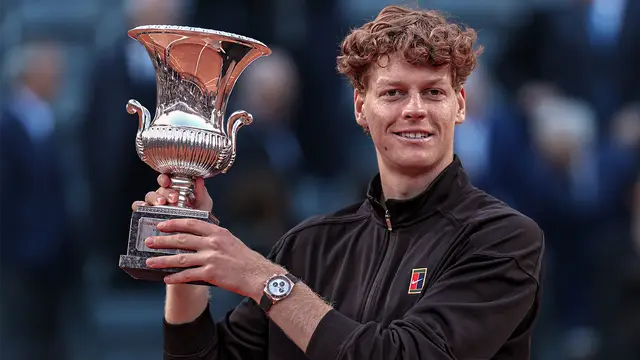
Five Masters 1000 titles in a row. That has never happened before — not in the 35 years since the Masters 1000 series began. It’s an extraordinary achievement, and if you’ve watched Sinner play this season, you know it isn’t a fluke. The guy is operating at a level that’s genuinely different from everyone else on tour right now.
And yet.
Madrid. Rome. Roland Garros. Three of those five titles came during the stretch where Alcaraz — the one player who’s been able to consistently push Sinner, who beat him at the Australian Open earlier this year — has been missing.
I’m not saying Sinner doesn’t deserve it. I’m genuinely not. He beat Alcaraz at Monte-Carlo before the injury even happened, which is worth remembering.
But the honest question floating around the tennis community is: does the record come with an asterisk?
I don’t have a clean answer. I don’t think anyone does. What I do know is that sports records have context, and context matters. And when Alcaraz comes back healthy — if he comes back healthy — this rivalry is going to answer a lot of questions.
What do you think? Sinner’s run: legitimate masterclass, or incomplete picture?
What This Means for the Rest of Us
Here’s where I’ll get personal for a second — more personal than the elbow tape, even.
When I was playing through tennis elbow, I told myself it wasn’t that bad. I told myself I’d stop if it got worse. I told myself one more session wouldn’t make a difference. I was wrong about all of it, and I’m paying the price in the number of careful mornings I’ve had since.
Alcaraz has the best sports medicine team money can provide. He has coaches, physios, doctors, data — a whole infrastructure built around keeping him healthy. And the conclusion that team reached was: stop now, or risk something much worse.
Most of us make that call alone, based on vibes and stubbornness.
My approach to injuries has always been more Michael than Alcaraz — which is to say, I have historically needed my body to make the decision for me rather than making it myself. If you’ve been playing through something you shouldn’t be playing through, you know exactly what I mean.
The point isn’t to be preachy about it. The point is this: it doesn’t matter how good you are. Del Potro was arguably better than everyone on tour for a period of his career. What ended his story wasn’t a lack of talent. It was a series of decisions that prioritized the short term over the long term.
The question none of us ask ourselves enough — and I’m including me in this — is not can I play today? It’s do I want to still be playing in ten years?
That’s the only question that matters, really.
Will He Make It Back?
Wimbledon starts June 30th. Queen’s is two weeks before that. The timeline is tight but not impossible — if this is a clean case of acute tenosynovitis with no deeper tendon damage, four to six weeks of proper rest puts him right on schedule.
If there’s more going on underneath the inflammation — if the tendon itself has been compromised — that timeline shifts significantly. And nobody outside of his medical team knows the answer to that right now.
I’ll be watching. I’ll probably be on the court at 6 AM watching, tape on my elbow, checking my phone between games.
Some of us never learn. But we keep showing up, which I think counts for something.
Tell me what you think in the comments. Alcaraz fan or Sinner fan — and be honest: have you ever played through an injury you knew you shouldn’t have?
We’re all in this together.
— Michael
Related reading: → Tennis Elbow: The Complete Guide for Tennis Players → How to Play Tennis With Tennis Elbow — Without Making It Worse → How to Fix Tennis Elbow: What Actually Worked for Me at 47