
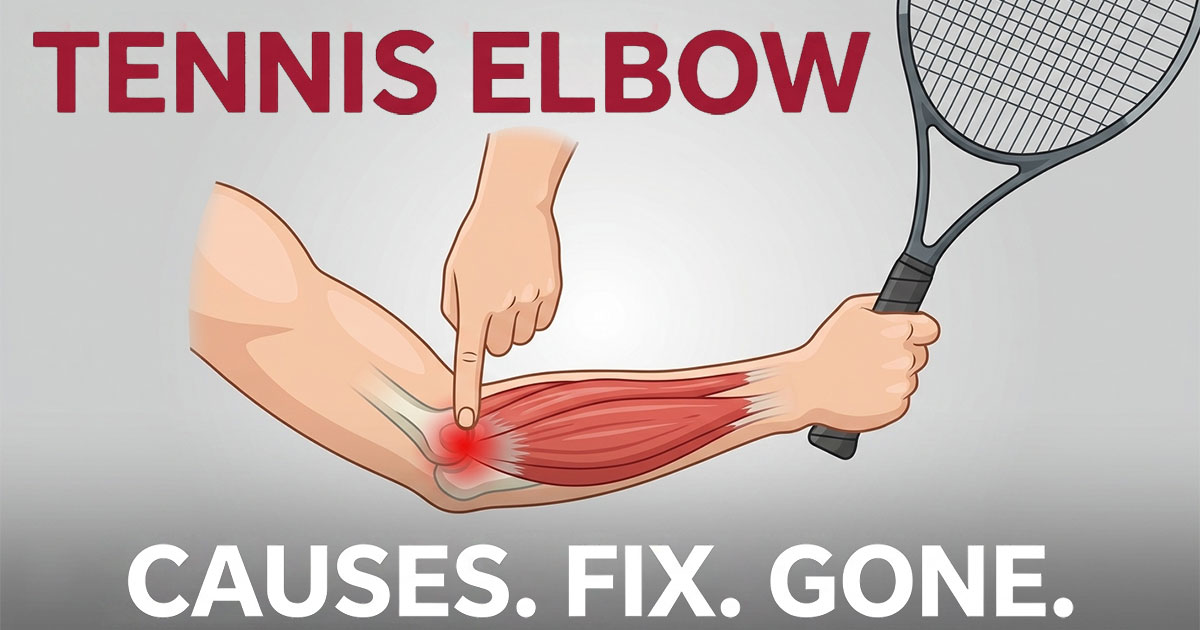
If you play tennis long enough, tennis elbow will find you. Maybe it already has — and that’s why you’re here.
I’ve been there. Five mornings a week, two hours a session, and one bad string job later — my right elbow had opinions about all of that. I fixed it without a brace, without medication, and without stopping play entirely. Everything I learned along the way is on this site.
This guide covers the full picture — what tennis elbow is, what causes it, how to fix it, and how to make sure it doesn’t come back. Each section links out to a deeper dive where relevant. Start here, go as deep as you need.
What Is Tennis Elbow?
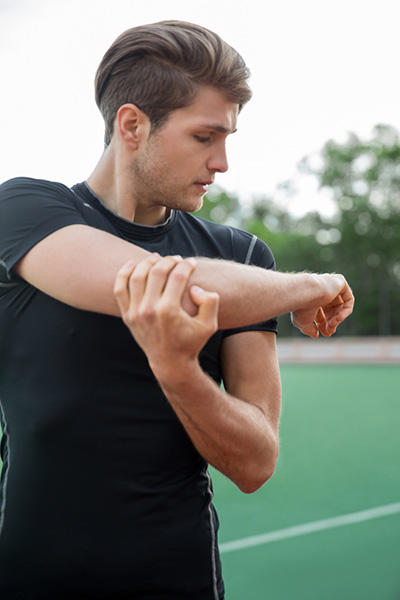
Tennis elbow — lateral epicondylitis if you want the clinical term — is inflammation of the tendon that connects your forearm muscles to the bony bump on the outside of your elbow.
Despite the name, most tennis elbow cases don’t happen on a tennis court. Painters, carpenters, plumbers, and office workers get it constantly — anyone doing repetitive gripping or twisting motions. Tennis players just have a particularly efficient way of aggravating it.
Symptoms to watch for:
- Pain and tenderness on the outside of the elbow
- Weak grip strength — struggle to hold a cup, turn a doorknob
- Pain when lifting, gripping, or twisting the wrist
- Ache that travels down the forearm toward the wrist
Tennis elbow vs golfer’s elbow: Tennis elbow hurts on the outside of the elbow. Golfer’s elbow hurts on the inside. Same family, different tendon, different treatment focus.
If the pain is on the inside — you’re in the wrong guide, but the right site. We’ll cover golfer’s elbow separately.
What Causes Tennis Elbow in Tennis Players?
The textbook answer is overuse — repetitive stress on the tendon over time. That’s true, but incomplete.
In practice, most recreational players develop tennis elbow because of one or more of these specific mistakes:
Wrong string setup. Stiff, high-tension strings transfer more vibration to your arm on every shot. What works for a 16-year-old semi-pro doesn’t work for a 47-year-old playing five mornings a week. I learned this the expensive way.
Skipping warm-up. Cold muscles and tendons under full load — every session. This one is more common than anyone admits. My coach told me years ago: “If others want to play right away, let them. You warm up properly first.” I forgot that advice. My elbow reminded me why it exists.
Racket too heavy. More weight means more force transmitted to the arm on every contact point. Simple physics.
Wrong grip size. Too small forces you to grip harder. Too large changes your swing mechanics. Either way, your tendon pays.
Poor backhand technique. Leading with the elbow on a one-handed backhand is one of the most common causes. Worth getting a coach to check your form if elbow pain keeps recurring.
Overuse without recovery. Playing hard every day with no rest, no stretching, no strengthening work. The tendon accumulates stress faster than it can repair itself.
Sound familiar? Probably at least two or three of those hit close to home.
How to Treat Tennis Elbow
The good news: most cases of tennis elbow resolve with the right approach at home. No surgery, no injections, no extended time off the court required — if you catch it early and handle it properly.
Here’s the framework:
Step 1 — Reduce the load. Not necessarily complete rest, but reduce intensity. Shorter sessions, lighter hitting, avoid the movements that aggravate it most. Give the tendon a chance to stop the inflammation cycle.
Step 2 — Ice, not heat. In the early stages, ice reduces inflammation. Heat does the opposite. If you’ve been rubbing hot oil on it — stop. I made this mistake. It doesn’t help.
Step 3 — Stretch and strengthen. This is the core of recovery. Gentle stretching restores mobility. Gradual strengthening rebuilds the tendon’s capacity to handle load. Both are non-negotiable for lasting recovery.
→ Full exercise routine — stretches, strengthening moves, and a simple daily schedule that takes 12 minutes: [Tennis Elbow Exercises That Actually Work]
Step 4 — Fix the equipment. If your string setup or racket contributed to the problem, changing them is part of the treatment — not optional. Softer strings, lighter racket, correct grip size.
→ Full story including the racket swap that helped my recovery: [How to Fix Tennis Elbow: What Actually Worked for Me at 47 — internal link]
Step 5 — Support during play. A good brace won’t fix tennis elbow, but it reduces load on the tendon while you’re on the court — buying your body time to heal between sessions.
→ Honest brace recommendations from someone who plays five mornings a week: [Best Tennis Elbow Brace for Tennis Players — internal link]
When to see a doctor: If pain is severe, affecting daily activities beyond tennis, or hasn’t improved after 6-8 weeks of consistent self-management — see a sports physio. Some cases need professional assessment. No shame in that.
Can You Still Play Tennis With Tennis Elbow?
Short answer: yes — if you play smart.
Most recreational players refuse to stop playing entirely when tennis elbow hits. Honestly? That’s understandable. The court is where we decompress, stay fit, and stay sane. Sitting out for weeks isn’t always realistic — or necessary.
The key is adjusting how you play, not just stopping altogether. Doubles over singles. Simpler shots over aggressive winners. Partners who understand your situation. A mindset shift from competing to maintaining.
It’s a different kind of tennis — and surprisingly, it often makes you a smarter player in the long run.
→ Full guide on playing through tennis elbow without making it worse: How to Play Tennis With Tennis Elbow — Without Making It Worse
How Long Does Tennis Elbow Last?
Honest answer: it depends almost entirely on what you do about it.
Mild cases — caught early, managed properly, some rest: a few weeks.
Moderate cases — ongoing for a while before you addressed it, still playing through it: 3 to 6 months.
Chronic cases — ignored for too long, kept playing hard, no stretching or strengthening: 6 to 12 months or more.
The variable that matters most? Whether you actually rest. Or at least reduce load enough for the tendon to recover between sessions.
If you’re like me and can’t bring yourself to stop playing entirely — the exercises become even more important. They’re what compensates for the rest you’re not taking.
How to Prevent Tennis Elbow
This is the section that matters most for long-term players. Treating tennis elbow is reactive. Prevention is what keeps you on the court year after year.
Warm up properly — every single time. Shadow swings first: forehand, backhand, volley, smash — 10 reps each, three rounds. Then short court rally for five minutes. Then gradually move back. Fifteen minutes total. Non-negotiable.
Choose your strings carefully. Softer, multifilament strings absorb more vibration. Avoid stiff, polyester strings unless you know exactly what you’re doing and why. Don’t switch strings just because someone at the club is raving about their new setup.
Match your racket to your body. Lighter racket, correct grip size, appropriate string tension for your level and age. What works for competitive juniors doesn’t work for recreational players over 40.
Strengthen consistently. A few minutes of forearm exercises every day builds tendon resilience over time. The players who never get tennis elbow aren’t lucky — they’re just stronger in the right places.
→ Simple daily strengthening routine, no gym required: [Tennis Elbow Exercises That Actually Work — internal link]
Cool down after every session. Five minutes of stretching before you pack up your bag. Wrist flexor stretch, wrist extensor stretch, shoulder and tricep stretches. Your tendon is most receptive to recovery work immediately after play.
→ Full warm-up and cool-down routine: [How to Fix Tennis Elbow]
Listen to your elbow. Mild discomfort after a hard session is normal. Sharp pain during play is not. The difference matters. Don’t wait for a full flare-up before you respond.
Frequently Asked Questions
Is it okay to play tennis with tennis elbow?
For mild cases — yes, with modifications. Reduce intensity, use a brace for support, and be consistent with your stretching and strengthening work. For severe cases — rest first, play later. Pushing through serious pain extends recovery significantly.
Should I use heat or ice for tennis elbow?
Ice in the early stages when inflammation is active — 15-20 minutes after play. Heat is better for chronic stiffness once the acute inflammation has settled. When in doubt, ice.
Can tennis elbow heal on its own?
Technically yes — most cases resolve within 6-12 months without treatment. But “on its own” usually means months of unnecessary pain and limitation. The right exercises accelerate recovery significantly and reduce the chance of recurrence.
Does a brace actually help tennis elbow?
Yes — with the right expectations. A brace reduces load on the tendon during activity, which means less pain while you play and faster recovery between sessions. It’s not a cure, but it’s a useful tool.
→ [Best Tennis Elbow Brace for Tennis Players]
What’s the difference between tennis elbow and golfer’s elbow?
Location. Tennis elbow — outside of the elbow, affects the extensor muscles. Golfer’s elbow — inside of the elbow, affects the flexor muscles. Both are tendon overuse injuries. Both respond to similar treatment approaches. Different stretch and strengthening focus.
What grip size helps prevent tennis elbow?
General rule: you should be able to fit one finger between your fingertips and palm when gripping the racket. Too small forces you to grip harder — more tension, more stress on the tendon. When in doubt, go slightly larger rather than smaller.
The Bottom Line
Tennis elbow is common. It’s painful. And it’s largely preventable — or at least manageable — with the right knowledge and consistent habits.
Warm up properly. Choose your equipment carefully. Stretch and strengthen regularly. And when it does show up, address it early rather than hoping it sorts itself out.
The players who keep playing into their 50s, 60s, and beyond aren’t the most talented ones. They’re the ones who figured out how to take care of their bodies along the way.
My coach said it best:
“It doesn’t matter how well you play. What matters is how long you get to play.”
— Michael