
I was 16. Maybe 17. Playing pickup soccer with friends on a concrete-adjacent patch of grass that we generously called a “pitch.”
I rolled my ankle mid-game. Felt that sharp, immediate jolt on the outside of my right foot. I hobbled off to the side, sat down, caught my breath.
Here’s the thing though. After a few minutes, it felt… okay. Not great. But okay. The pain had backed off enough that my brain started doing what teenage brains do — rationalizing.
It’s probably fine. The guys need me out there. I’ll just be careful.
So I went back in.
I rolled it again. Same ankle. Same game. Same session.
This time it wasn’t okay. I knew it the second it happened. I went down and didn’t get back up. That evening, my ankle was swollen and purple, and the muscles in my thigh felt loose and wrong in a way I couldn’t explain. I was off sports for months.
That was the dumbest decision I’ve ever made on a playing field. And I’ve been paying for it ever since.
Not here for the story? No problem. Here are my top picks:
- Prevention (healthy ankles): McDavid 195 Compression Sleeve → Amazon
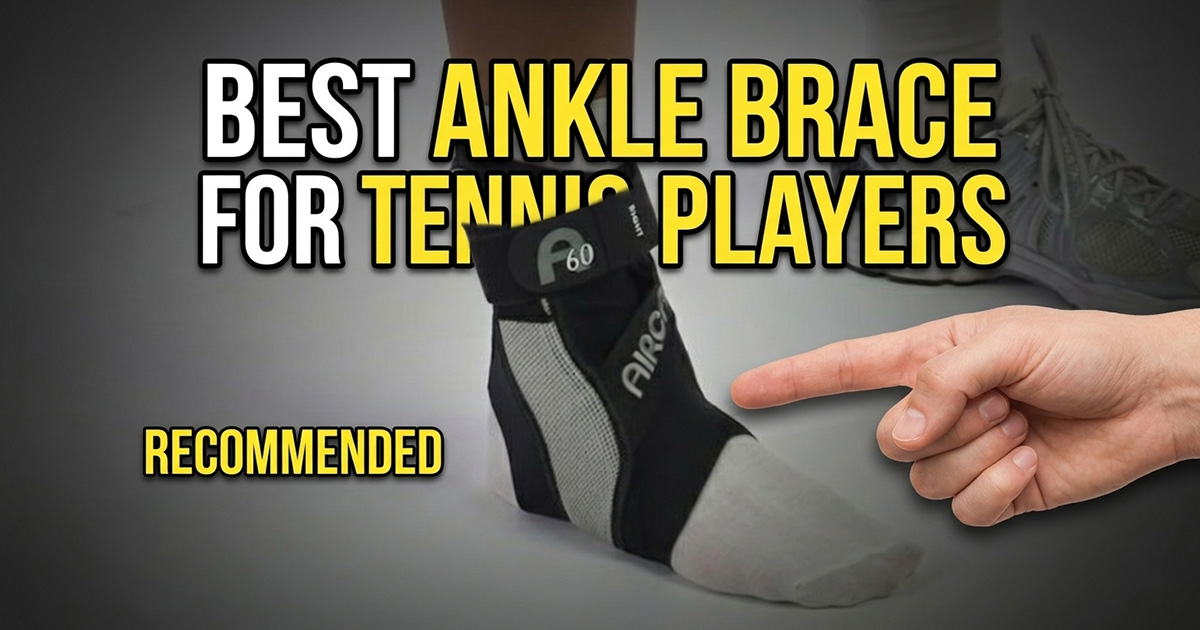
- Some ankle history: Aircast A60 — what Andy Murray wears → Amazon
- Recurring instability: McDavid 199 Lace-Up Brace → Amazon
Still here? Good. Let me tell you why these three — and why it matters more than you think.
You’re Not Alone — From the Local Pitch to Wimbledon
Here’s what I didn’t know at 16: what I did has a name. It’s called a Grade 2 ankle sprain on top of an already-sprained ankle. And it’s incredibly common — because the first sprain loosens the ligaments, and if you go back before they’ve stabilized, the second one goes deeper.
I also didn’t know that some of the best athletes in the world have made the exact same mistake.
Andy Murray — three Grand Slam titles, two Wimbledon championships, Olympic gold — has been dealing with ankle issues since he tore a ligament at 18 years old. That injury never fully went away. It followed him through his entire career, forced him out of the French Open in 2013, and has required him to wear an Aircast A60 ankle brace in virtually every match he’s played since. He doesn’t hide it. He just manages it.
The lesson Murray learned — that protecting a vulnerable ankle is smarter than pretending it’s fine — is the same lesson I wish someone had handed me on that grass pitch.
And it’s the same lesson Carlos Alcaraz is living right now. His situation is a wrist, not an ankle, but the principle is identical: stop before the damage gets worse. I wrote about Alcaraz’s decision to skip both Roland Garros and Wimbledon this season — and why that kind of call takes more courage than most people realize. Rec players could learn a lot from it.
The Real Cost of a Bad Ankle
Most people think tennis is about the arm.
It’s not.
Footwork is 70% of the game. The split step. The explosive first move. The recovery sprint after a wide ball. The last inch that gets you into position before your racket even comes up. Your arm just finishes the job — but your feet set up every single shot.
Which is exactly why what happened on that pitch at 16 still shows up on the tennis court today.
After that second sprain, my ankle became unreliable. Not constantly painful — just unpredictable. I’d roll it walking in unfamiliar shoes. I’d feel it give slightly on uneven ground. On the tennis court, I compensate without even realizing it. I hesitate a half-step on certain lateral movements. I don’t push off my right foot as hard as I used to on wide forehands.
I was fast in school. Genuinely fast — top of my class in sprint times, competitive in long jump. That version of me feels like a different person now.
The ankle doesn’t stop me from playing. But it has quietly taken something.
I’ve also watched it happen to players in my circle — guys who rolled an ankle during a match, felt it ease up, kept playing, and ended up sitting out for three months instead of one week. The pattern is always the same. The first sprain is the warning. The second one is the bill.
If you’ve ever dealt with tennis elbow, you know how overuse injuries compound when you don’t respect them. Ankle sprains work the same way — except they happen faster and the damage shows up immediately. One bad step is all it takes.
So What Actually Helps: The 3-Situation Guide
Here’s the thing about ankle braces — there’s no single right answer. The right brace depends on where you are right now.
I’ve broken it down into three situations, because that’s how most of us actually think about this.
Situation 1: “My ankles are fine. I just want to keep them that way.”
Good instinct. Ankle sprains are actually the most common injury in tennis — more common than tennis elbow, which surprises most people. The constant lateral movement, the sudden stops, the split steps on hard courts — your ankles take a beating even when everything feels fine.
For prevention, you don’t need maximum support. You need something lightweight that improves your ankle’s awareness of its own position — what physios call proprioception. A compression sleeve does this well. It fits under your tennis shoe without adding bulk, keeps the joint warm, and gives your ankle just enough feedback to react faster.
Pick: McDavid 195 Compression Ankle Support — lightweight, low profile, fits in any tennis shoe. Good starting point if you’ve never had ankle issues and want to stay that way.

Situation 2: “I’ve rolled it before and I’m not fully confident out there.”
This is the sweet spot for most rec players. You’ve had at least one ankle sprain — maybe more than one. It healed, more or less. But there’s a small voice in the back of your head on certain shots, certain surfaces.
This is where the Aircast A60 comes in. And this is what I’d recommend to most players reading this.
The A60 isn’t a maximum-support medical brace. It’s a low-profile athletic brace designed to prevent rollover — the specific motion that causes most ankle sprains. Two stabilizers on either side of the ankle, molded at a 60-degree angle, keep your ankle from turning inward on that vulnerable step.
It’s lightweight enough to forget you’re wearing it. It fits inside a tennis shoe without squeezing. It goes on with a single strap — no lacing, no fiddling courtside.
And it’s what Andy Murray wears. Not as a crutch. As a smart, permanent part of his game management. Aircast even made a white version specifically designed to blend into Wimbledon’s all-white dress code. That detail tells you everything about how seriously some players take this.
If you’ve got ankle history and you’re playing five days a week — this is the one.

Situation 3: “My ankle is a recurring problem. It goes on me more than once in a while.”
This is my situation. Has been for years.
For chronic ankle instability — where it’s not just a memory of one sprain but an ongoing pattern — you need more mechanical support than the A60 provides. A lace-up brace with rigid lateral stays gives your ankle the kind of external structure that the stretched ligaments can no longer provide on their own.
It’s bulkier. It takes longer to put on. Some players find it restrictive at first. But if your ankle genuinely gives way on a regular basis, the trade-off is worth it.
Pick: McDavid 199 Lace-Up Ankle Brace — durable, fits in tennis shoes, and has a strong track record with players who need real structural support. Not glamorous. Gets the job done.

Quick Comparison
| McDavid 195 Sleeve | Aircast A60 | McDavid 199 Lace-Up | |
|---|---|---|---|
| Support level | Light | Moderate | High |
| Fits in tennis shoe | Yes | Yes | Yes (snug) |
| Ease of use | Slip on | Single strap | Lace up |
| Best for | Prevention | History of sprains | Recurring instability |
| Price range | $15–20 | $30–40 | $25–35 |
My Honest Take
I’m not a physio. I’m not a coach. I’m a 47-year-old guy who plays five mornings a week and has been managing a compromised ankle for longer than he’d like to admit.
I can’t tell you which brace will fix your specific situation. What I can tell you is this: the players I’ve seen bounce back fastest from ankle issues are the ones who stopped early, supported the joint properly during recovery, and didn’t go back to full play until they were actually ready — not just until the pain backed off enough to feel tempting.
That second part is the hard part. I know. I failed it spectacularly at 16.
The Aircast A60 is my recommendation for most tennis players reading this. It’s what a three-time Grand Slam champion wears because he knows what a neglected ankle eventually costs. It’s unobtrusive, it works, and at $30-something it costs less than one trip to a sports physio.
The Number You Should Remember
A decent ankle brace: $30–50.
Sitting out three months with a Grade 2 sprain you made worse by going back too soon: priceless, in the worst possible way.
It doesn’t matter how well you play. It matters how long you get to play.
I learned that lesson on a grass pitch at 16. You don’t have to learn it the same way.
Have you played through an ankle injury you probably shouldn’t have? Tell me in the comments. And if you’ve found a brace that actually works for you on court — I want to know about that too.
— Michael